New logos get the applause, but renewals pay the salaries. In a subscription business, the cheapest revenue you will ever earn is the contract you already won - and the most expensive mistake is letting it lapse because nobody was watching the date. Missed renewals rarely look like a decision; they look like a Tuesday where nothing happened.
Why renewals slip
- The dates live in documents, not in a system - buried in signed PDFs and old email threads.
- Ownership is fuzzy. Sales closed it, success manages it, finance bills it. Everyone assumes someone else is watching.
- Multi-year terms hide the cliff. A three-year contract signed in 2023 is a 2026 problem that no one has looked at since 2023.
- The at-risk signals arrive late. By the time a customer says "we're evaluating options", the renewal conversation should have been six weeks old.
The playbook
- Get every contract into one system - with its renewal frequency, committed term and termination date modeled separately. A contract that bills monthly inside a 3-year commitment behaves nothing like a month-to-month.
- Set lead windows per contract, not a global default. Enterprise renewals need 90 days; a small annual license might need 30.
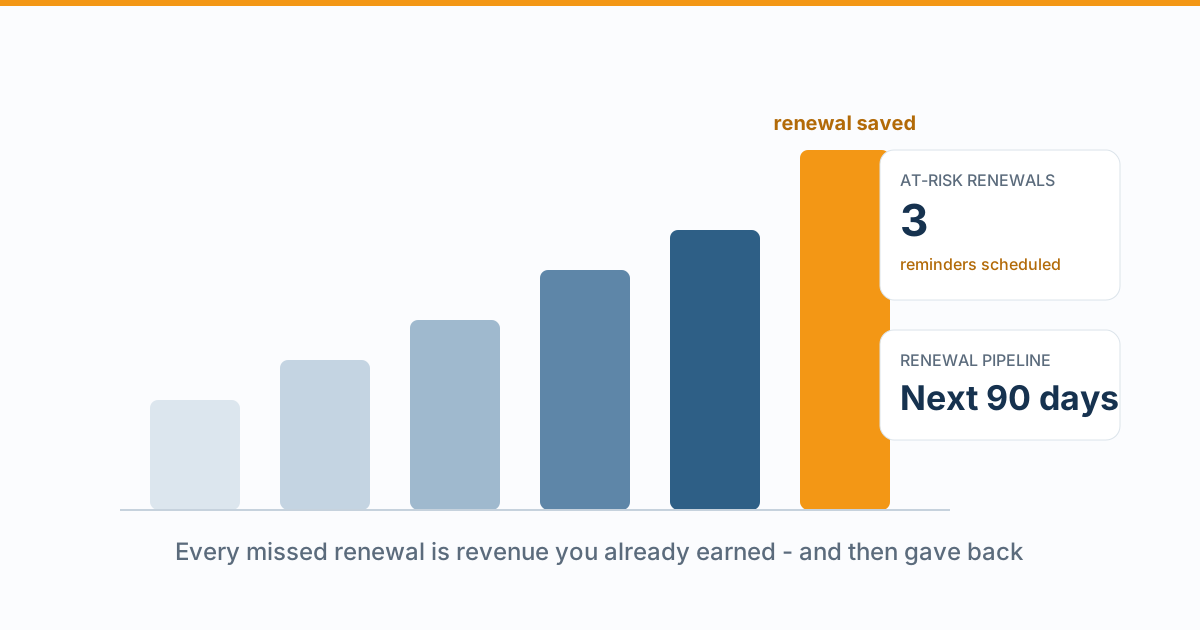
- Work a renewal pipeline exactly like a sales pipeline: what renews in the next 90 days, who owns each conversation, what is at risk and why.
- Flag at-risk early and loudly. Payment failures, downgrade requests and silence are all signals; put them on a watchlist someone actually reviews weekly.
- Report on it monthly. MRR and ARR trends, renewal pipeline, at-risk value. If the number is not on a dashboard, the renewal is not being managed.
What this looks like in Subscriptions Manager
Contracts carry renewal frequency, committed term and termination date as first-class fields. Lead windows drive notifications to the right owners. The dashboard shows what is coming; reports cover MRR and ARR trends, the renewal pipeline and the at-risk watchlist; and SubMan AI answers "which contracts need attention this month?" in plain language, with every answer linked to the underlying records.
The result is boring in the best way: renewal dates stop being surprises, at-risk accounts get a conversation instead of a lapse, and the revenue you already earned stays earned.